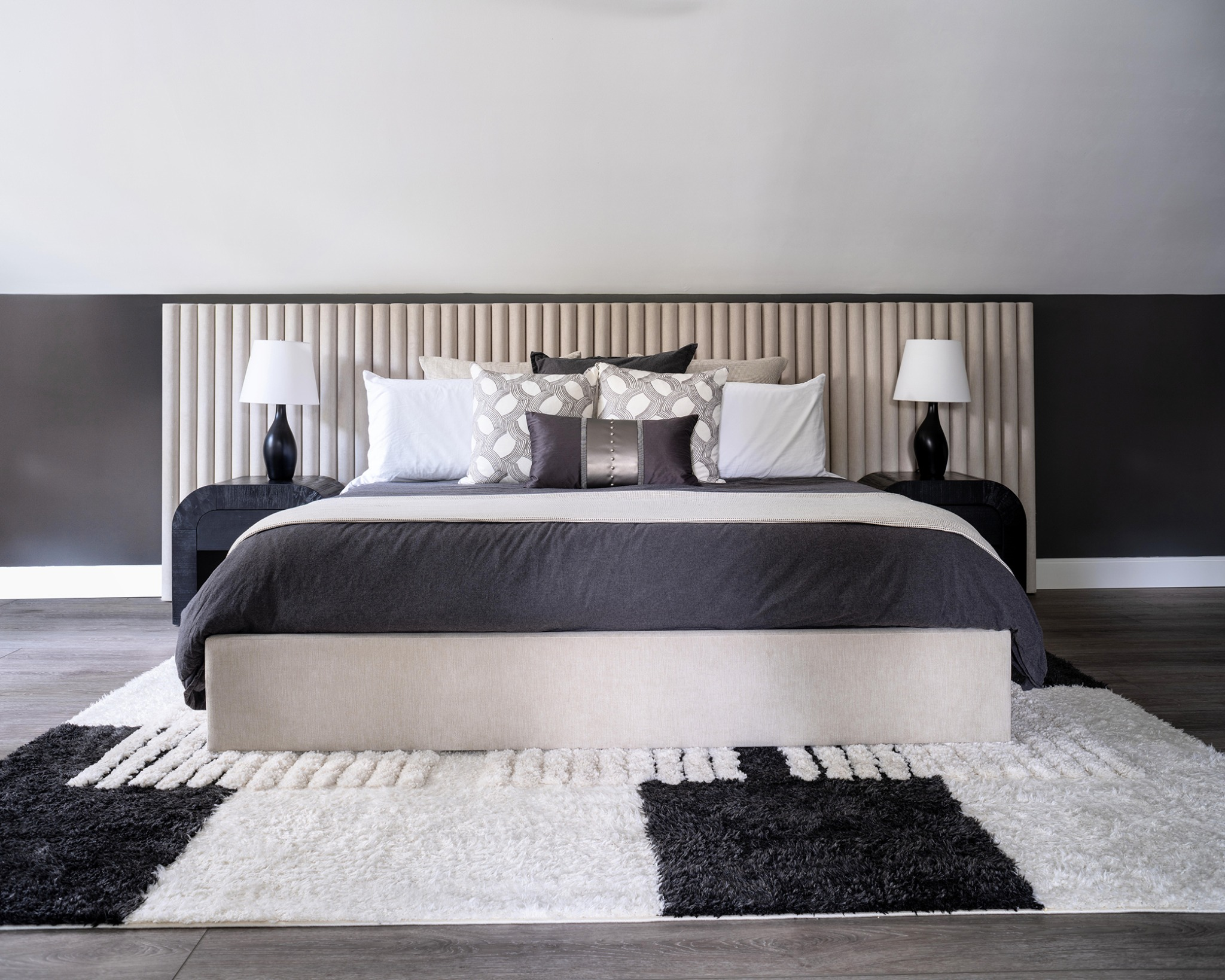
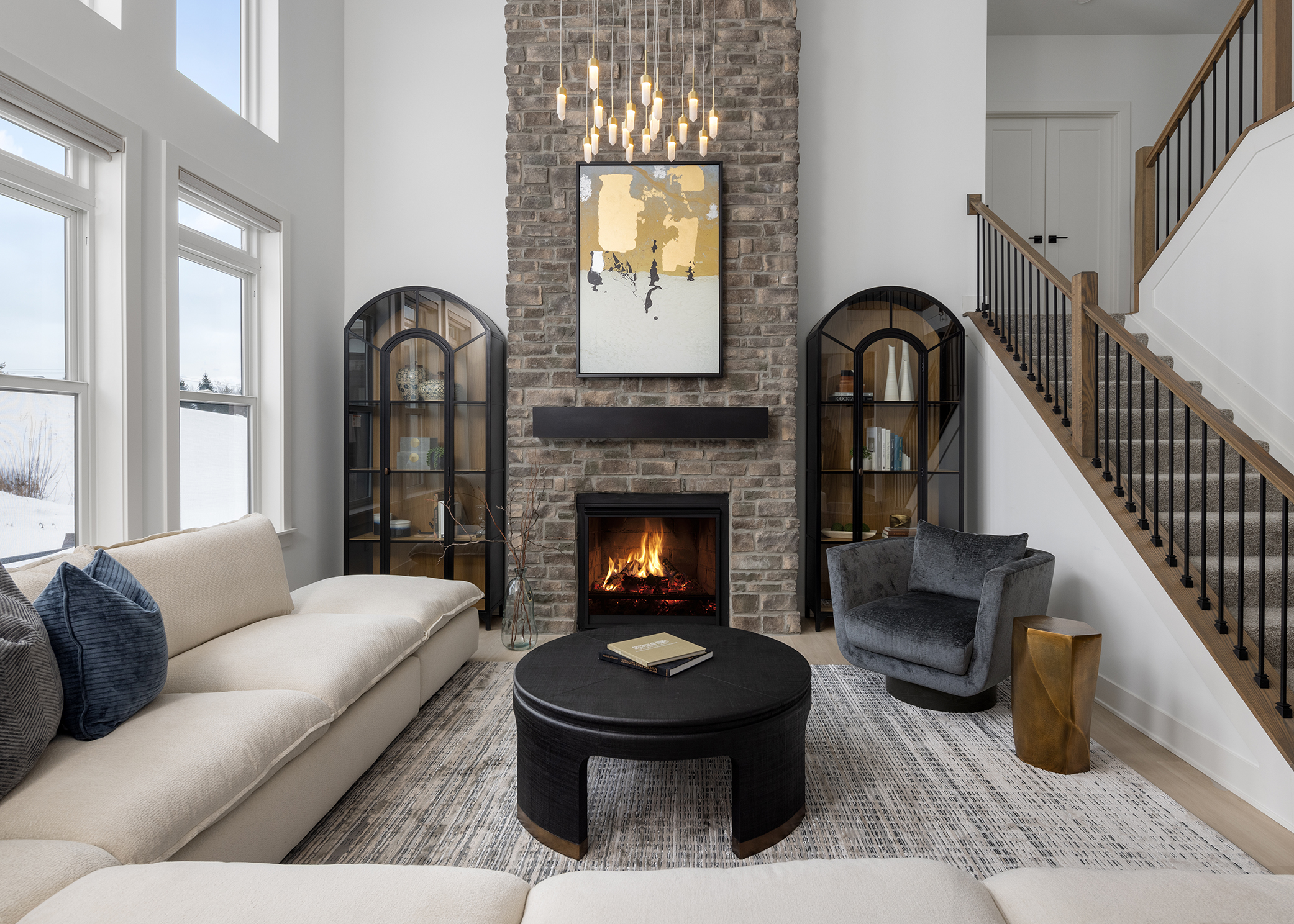
Good lighting does more than brighten a room — it shapes the way you experience your home. The right fixtures can highlight architectural details, make colours feel richer, and create a sense of warmth that carries you through the darker months.
Here’s how I approach lighting in client projects, and how you can use the same principles in your own home:
Start with the Purpose of the Room
Before choosing a fixture, think about how the room is used. A living room needs softer, layered lighting for conversation and relaxation. A kitchen or home office calls for focused task lighting. Bedrooms benefit from warm, low-glare options that help you wind down.
Once the function is clear, the lighting plan becomes easier to build.
Use More Than One Light Source
One overhead light is rarely enough. To create depth and balance, aim for three layers:
- Ambient lighting: your overall, general light (ceiling fixtures, recessed lights).
- Task lighting: lighting that supports specific activities (reading lamps, under-cabinet lighting).
- Accent lighting: lighting that adds visual interest or highlights features (picture lights, wall sconces).
Together, these layers help a room feel intentional and complete.

Choose the Right Scale
Scale is one of the most common challenges I see in homes. Fixtures that are too small can make a room feel unfinished.
A simple guideline:
- Over a dining table, choose a fixture that’s roughly half to two-thirds the width of the table.
- In an entryway or living room, make sure the fixture has enough visual presence to anchor the space.
Larger fixtures often bring the balance the room was missing.

Pay Attention to Colour Temperature
The colour of the light itself matters as much as the design of the fixture.
For most homes, warm light — around 2700K to 3000K — creates a comfortable, inviting atmosphere.
Cooler temperatures work well for task-focused areas, but too much can make a room feel stark.
Keeping the temperature consistent across a space helps everything feel cohesive.

Think About Height and Placement
Even the perfect fixture can feel off if it’s hung too high or too low.
A few helpful guidelines:
- Dining fixtures generally sit 30–34 inches above the table.
- Table lamps should feel natural when you’re seated — with the bottom of the shade near eye level.
- In hallways or living rooms, ensure enough clearance for movement while still maintaining presence.
Small adjustments in placement can completely change how a space feels.
Use Dimmers Wherever Possible
A dimmer turns one light into many. It allows you to shift the room from bright and functional to soft and relaxed with a single touch.
One important detail: make sure your bulbs are dimmable. Not every bulb will work with a dimmer switch, and using the wrong one can cause flickering or inconsistent light.
Let the Room Guide the Style
There’s no single rule for choosing the “right” fixture — it’s about finding a piece that suits your architecture, furniture, and overall style. Some rooms call for clean lines; others benefit from texture or a sculptural shape.
Trust how the room feels when the light is on. Good lighting should support the mood you want to create.
Final Thoughts
Lighting is one of the most impactful elements in any home, yet it’s often overlooked. With the right mix of scale, placement, and light quality, you can make your rooms feel warmer, more functional, and more complete.
If you’re planning a refresh and aren’t sure where to begin, thoughtful lighting is a great place to start.
Need help getting the lighting right?
If you’re planning a refresh or feeling unsure about fixture selection, scale, or placement, a professional eye can make all the difference. A thoughtful lighting plan brings clarity, comfort, and cohesion to your home.
If you’d like support, I’d be happy to help. Contact me to book a consultation.