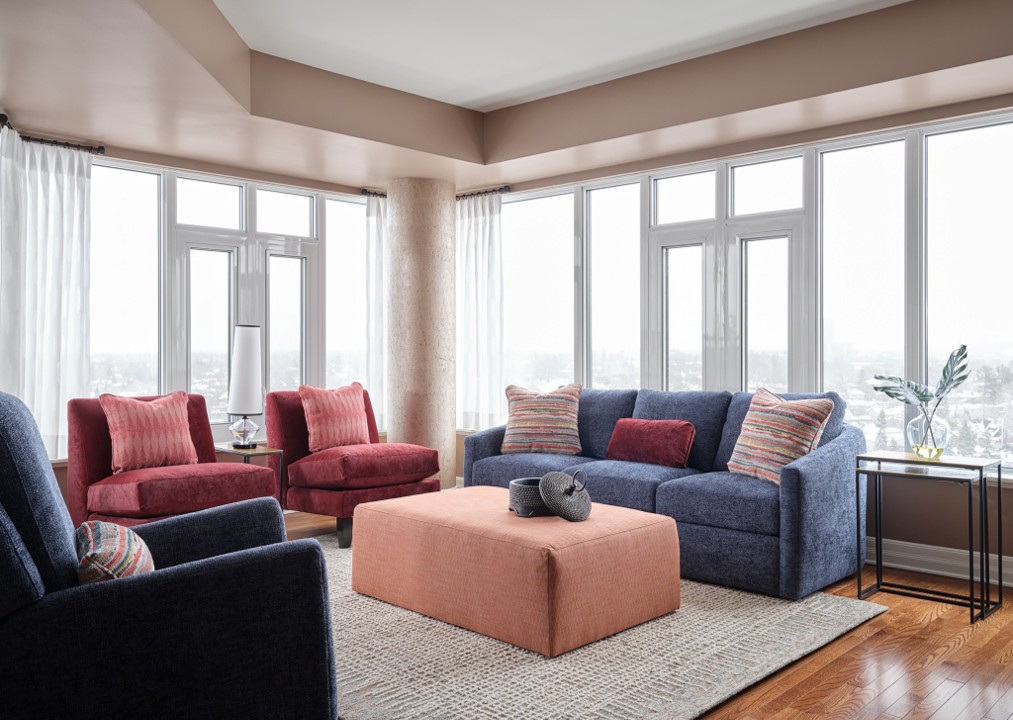
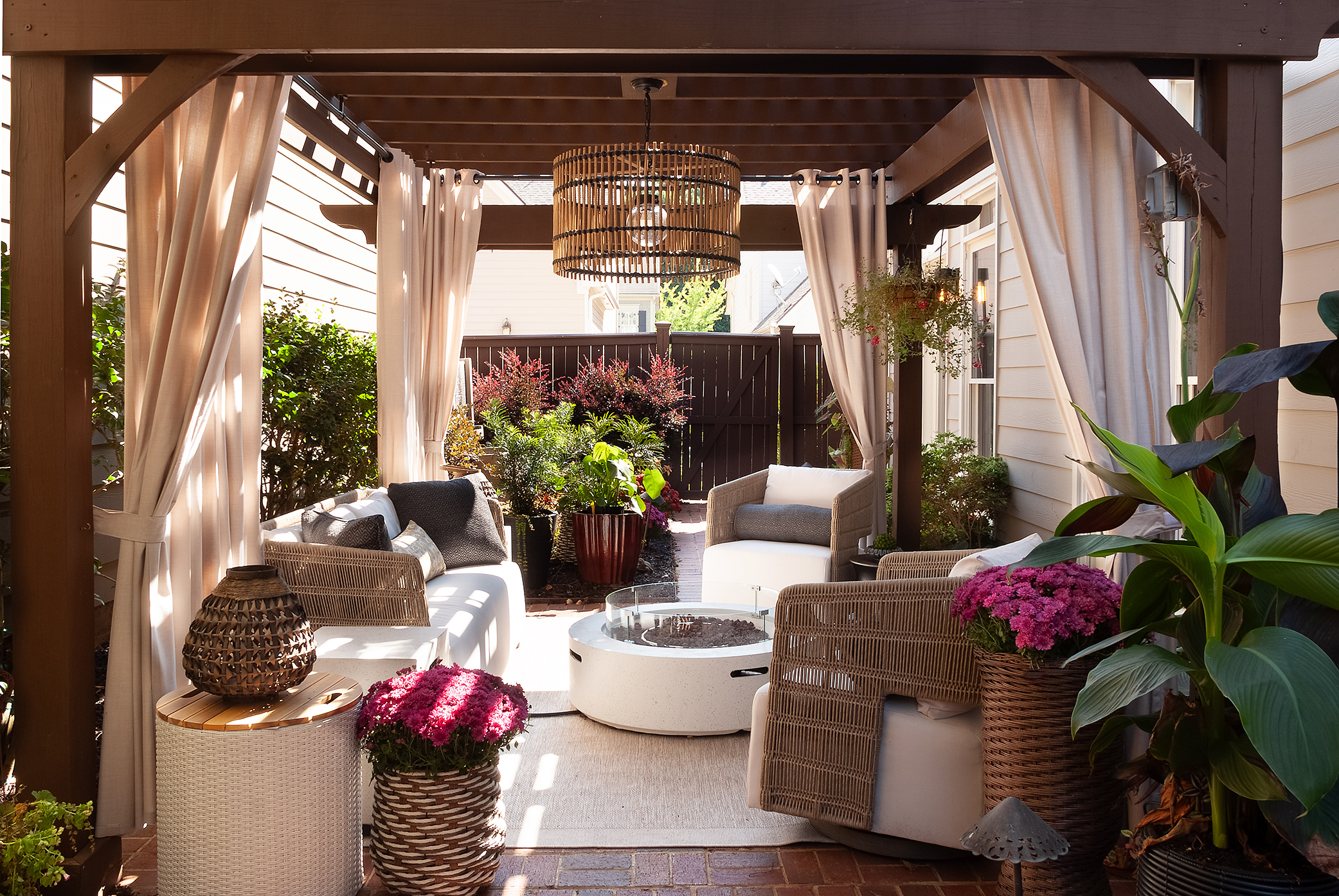
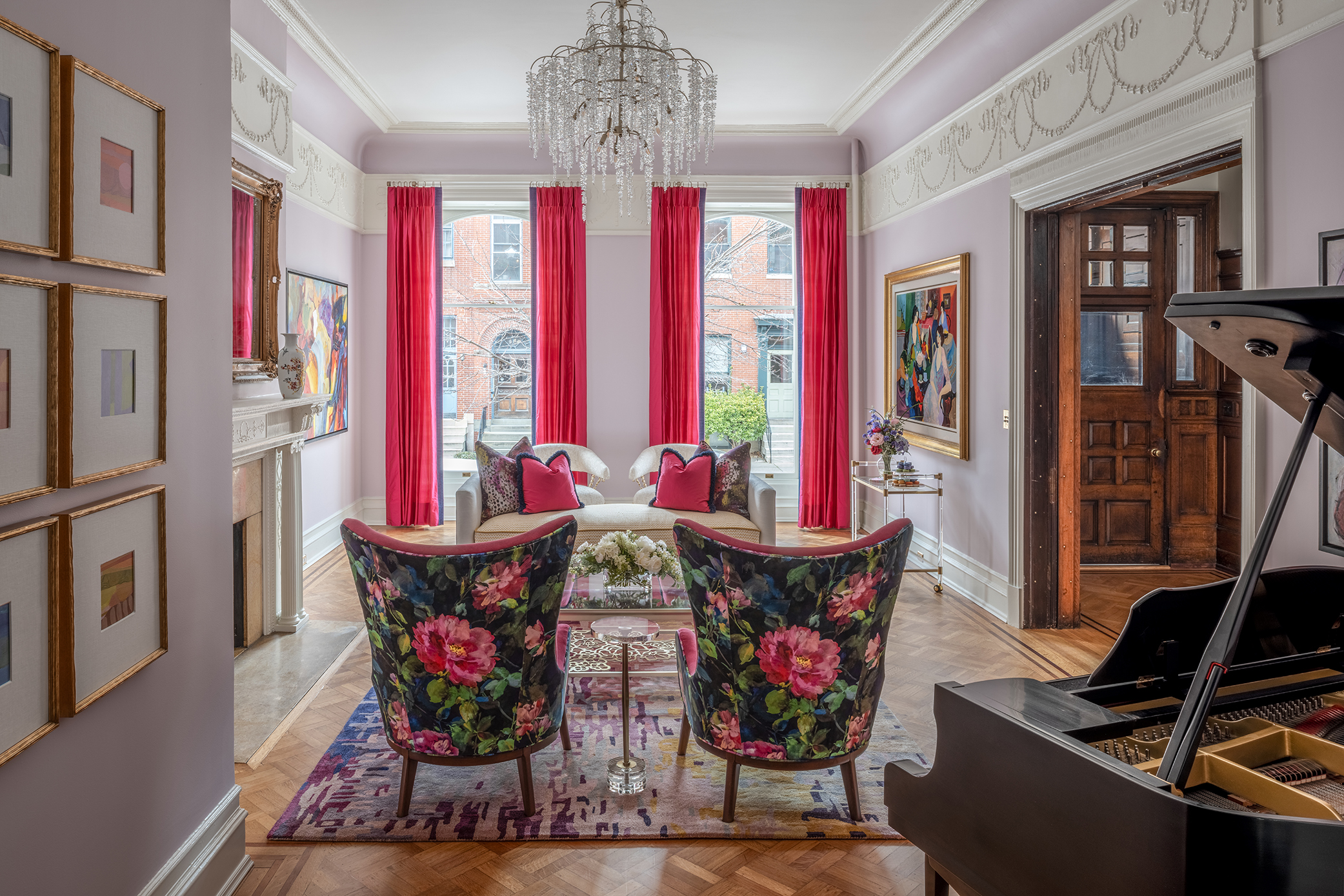
Window treatments are one of the most impactful elements in a room, yet they’re often misunderstood or left until the very end of the decorating process. When they’re done well, they quietly pull everything together. When they’re not, even a beautifully furnished space can feel slightly off.
Below are four common window treatment mistakes homeowners make — and professional guidance on how to avoid them.
1. Hanging Curtains Too Low
One of the most common window treatment mistakes is mounting curtain rods too close to the window frame.
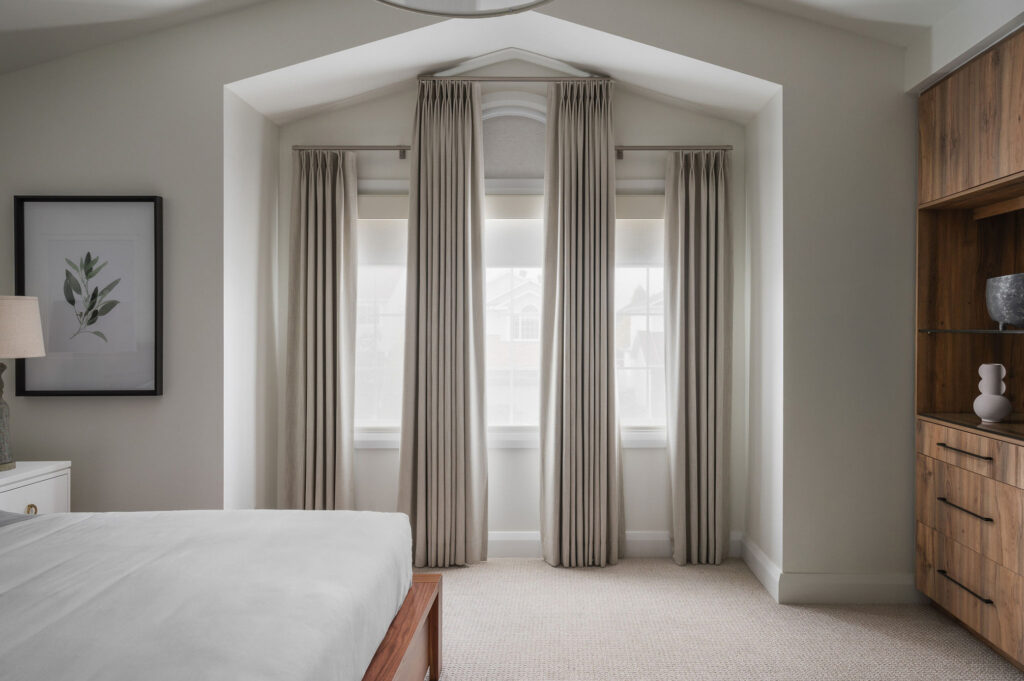
As a general rule, curtains should be hung as high as possible — often just below the ceiling or crown moulding. This helps visually increase ceiling height, makes windows feel more substantial, and creates better overall proportions in the room.
A few rules of thumb designers rely on:
- Hang rods higher than you think you need to
- Extend rods beyond the window frame so panels can fully clear the glass
- Treat the wall and window as one visual composition, not separate elements
Curtains hung too low interrupt sightlines and look odd.
2. Curtains That Are Too Short (or Too Long)
Curtain length is one of the details that most clearly separates custom window treatments from off-the-shelf solutions.
Some designers prefer drapery that lightly touches the floor or breaks slightly. My own preference is more precise: I want panels to sit just millimetres above the floor — close enough to feel intentional, clean, and tailored, without ever puddling.
That level of accuracy isn’t something I achieve alone. I work closely with a trusted, highly skilled window treatment installer, and his precision is essential to achieving beautifully hung, award-winning drapery. It’s a reminder that great window treatments are the result of both thoughtful design and expert execution.
3. Not Enough Fullness
Another common mistake is underestimating how much fabric is needed for drapery to look right.
For custom drapery, the standard is 2.5 times the width of the window. I wouldn’t recommend going less than that for traditional pleated panels — it’s what gives drapery its softness, structure, and presence.
For sheer window treatments, fullness matters even more. To achieve a truly luxurious look, the rule is three times the width of the window. Sheers need that extra fabric to avoid looking flat or skimpy.
The exception is ripplefold drapery, which is designed to work at approximately two times fullness due to its engineered wave. Either way, fullness isn’t optional — it’s foundational to how custom window treatments perform and how they’re perceived in a space.

4. Treating Window Treatments as an Afterthought
Designers consider window treatments as part of the decorating process from the beginning.
Function comes first — privacy, light control, insulation — and that informs whether a room needs a single solution such as blinds or shades, or a layered approach that includes drapery, stationary panels, operable panels, or a valance.
Window treatments are also part of space planning. When we’re laying out furniture, we’re not only thinking about traffic flow and clearances — we’re thinking about where the eye lands and how it moves around the room. How you dress a window can create a focal point or quietly balance a space through fabric choice, pattern, colour, and scale.
Because of the role window treatments play in both function and design, they’re selected alongside furniture — not added at the end. When you understand how integral they are to making a room feel complete, it’s no surprise that window treatments often cost as much as a well-made piece of furniture.
Not sure which window treatments are right for your space? We can help! Contact us today to schedule your complimentary design consultation.